Magick in Tsindwr
The Wellspring of Essence
Like any sphere of existence, the world of Tsindwr consists of a swirling sea of cosmic truths that define its nature. To art of altering the truths of reality is called Magick, and is the basis in which all existence stands. The compound truth of a being, entity, or phenomenon is called its Essence: an all-encompassing term for the collection of traits that define the core nature of an individual thing. Entities that are considered individual enough to have their own Essence include the elements, natural forces, and even each individual conscious being.
To know and understand the Essence of an entity is a vastly difficult task, and mastery may take a decade of deep exposure and meditation on the subject. Only after mastering this intuition of an entity's nature does the entity reveal to a Mage its Name: a divine word that encapsulates the nature of an entity. The possession of a Name gives its wielder certain authority over its entity; one who wields a Name may invoke it in a command that harnesses an Essence but is restricted to its definition. One who wields the Name of the sea cannot command it to burn, but may calm its waters for a safe voyage.
Since existence itself is a form of Magick, the world is filled with Essences and magical energy to harness and pull from. This Wellspring of Essence has been since named The Arras, a name referring to the magical energy of the natural world assigned by early Mullburrow civilization. The artisans of early Mullburrow civilization were the first to harness Essence, albeit in a minor way. Their understanding of Magick viewed it as a great tapestry of elements whose patterns could be extended to imbue enchantments corresponding to the materials used. Doing this, Mullburrows were able to create the first forms of Artifice, a practice using the energy of manual work and orderly fabrication to infuse magic into physical form.
The Symptoms of Planar Convergence
Warp
Umbrea's history is wrought with extraplanar influence, so the land is no stranger to the realities of other planes leaking into its own. In fact, the planes of Faerie and Gloam are already completely converged upon the Material Plane. This means that there has always been an external factor in the magic of Tsindwr that subtly influences the nature of all Essence in this world. This influence is called Warp, and is defined by its origin from planes other than the Material Plane. By leaking into Tsindwr, this Warp changes the rules of existence of whatever it touches, creating strange and alien Magicks that would not otherwise be possible in the Material Plane.
In the Arcanist community, Warp represents all that has not been explained in the Arcane Colleges: magic such as Fey deals, the corruption of the Gloam, and the mystical practices of Psionics all come from worlds of different contours of truth, and are completely foreign concepts in the College's current understanding of Magick.
Arcanists versus Sorcerers versus Thaumaturgists
The Grammar of The Arras
As Magick has been explored by scholars and amateurs alike, there have been many discoveries regarding new methods to harness The Arras. Mages (any wielder of The Arras) have separated themselves into many different specialties, each of which has a certain vocabulary associated with them. This resource will provide a determinant way to refer to different types of Magick and Mages.
The Wizarding World
The attempt to express The Arras in understandable terms has been pursued ever since there was a need for self-defense, which is to say it has a long and glorious tradition. Those who followed this tradition are called Arcanists: those who would take advantage of the innate Essences of materials and other methods made to skip past the effort necessary to wield Names.
The first of these Arcanists were the Mullburrows, who specifically pioneered the subtradition of Artifice. By using their understanding of the properties of the medicinal herbs and fauna of their environment and mimicking the structural patterns found in nature: they spun enchantments of protection, fertility, and luck using what they refer to as Gonjyue /goŋ'dʒjuwe/, roughly translating to "Divine Geometry." Branching patterns of vine-like embroidery on a cotton blouse, carefully-wound crowns of dried flowers, and carved bone trinkets set into braided hair are some of the many examples of early dwoemercraft birthed by civilization. This particular form of early Artifice was intuitive; there were no defined protocols for constructing an enchantment: only the abstract application of correlations between natural properties and the enchantment's intention.
The next advancements made in the Arcane came during the Drakkonic Era. Mages of the Empir Drakoni sought to elaborate on the fundamentals of elemental runes. Bringing the primal runes from the elemental planes from which the Giants and Dragons came, both Dragons and their citizens worked on developing a method of dwoemercraft called Inscription. The runes themselves carried with them a modicum of Warp from the elemental planes, but were a relatively docile source of energy to augment and repurpose into customized dwoemers. To do this, Mages elaborated on the physical carving of the runes, enduring many trials and errors to develop new alteration runes made to diffuse, bind, release, and extend the fundamental runes. The invention of an oil-based ink made with the remains of sea Titans allowed for more flexible dwoemercraft, creating the possibility for spells to be cast in the span of seconds through writing, as opposed to its previous limitation of etching-based application.
After the fall of the Drakkonic Empire, arcane advancement was stripped of its formality and left in the hands of ambitious survivalists. These budding Mages turned to the wisdom of Hedges, who were those who negotiated the boundaries between the Material and Warp. Also called Hedge Mages, they spend their efforts understanding the distinctions between what is of this plane (considered Material) and what is leaking into this plane as Warp. These are not Arcanists but they made a lasting impact on the future Colleges' understanding of Essence; they will be elaborated upon in the next section. Right now, Hedges were the mentors of the wily surviving Mages of the Empir Draconi. These mentors would lead the next generation of Mages towards reconnecting with the root of Magick: the understanding of Essence and Names. This new generation of Mages were called Witches: those who used the ancestral knowledge of tradition to tap into Names instead of needing to meditate on their meaning themselves. This heavily relied on the fact that a culture's arts such as folklore, song, and poetry were capable of representing an Essence during one time, then also gathering new context and meaning as they are passed on through generations. Witches specialized in a spellcasting form called Chanting, which invokes the words of ancestral rites and song to channel Essence: much different from the practice of Inscription, which harnesses runes to pull from the meaning of symbols that represented the Names of fundamental forces of nature. This gives a Witch a baseline understanding of the Essences they are channeling, as well as the flexibility to use certain Chants for varying purposes.
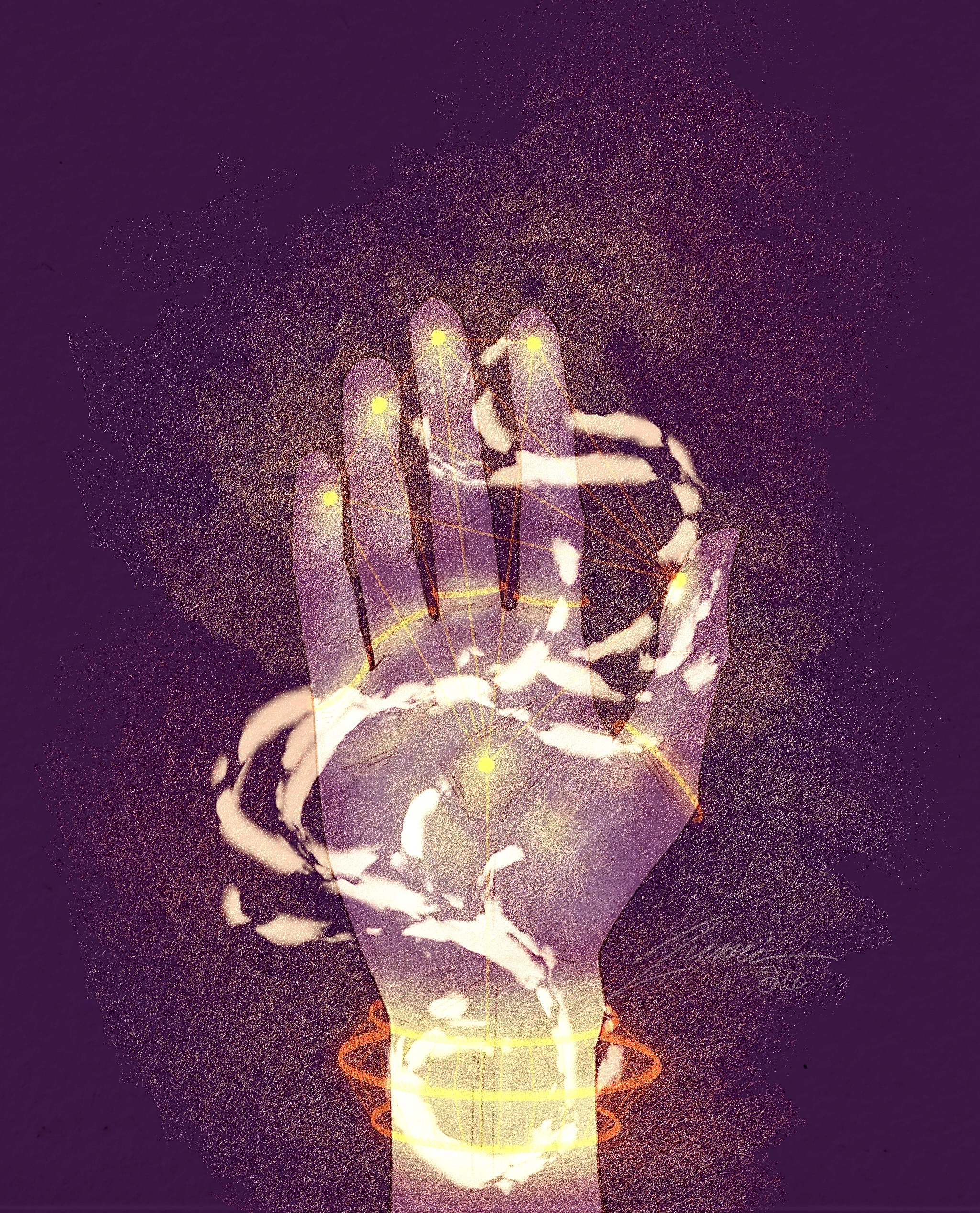
Modern Mages would elaborate further on the history of spellcasting by pulling from the several different methods created in the history of Umbrea. Wizards would combine Inscription and the lyrical content of Chanting to innovate the casting method of Scrivening, allowing Wizards to memorize phrases of ancient language and translating them into the magical pidgin of Glyph. This is a constructed language specifically used to translate spoken language into the representation of Runes. Glyph can be expressed as speech, writing, and manual signing, essentially creating new entry points for green Mages to learn relatively simple mediums for spellcasting. The many mediums of arcane expression allow for somatic spellcasting, spell scroll drafting, and the ease of indexing spells without casting them upon writing.
The investigation of innate Essences found in materials was also pursued, pulling much inspiration from the first practitioners of Artifice from Mullburrow civilization. Modernized Scrivening opened the floodgates to further research, including the pursuit of Alchemy. Alchemists of the Luxichron Era would begin a flurry of classifications and ordering of Vis /vi/, which in Alchemy refers to a discrete property found in a given material. Alchemists describe the world as a collection of entities and phenomena composed of Vis. Since most of the theoretical presence of Vis comes in a composite form, Alchemy involves the unmaking and refining of materials to reach purity that can imitate an invocation of the Name of the relevant Vis.
Wielders of the Name
Those who do take the meditative path of understanding the true nature of that which surrounds them are called Invokers. Since Names are intrinsically tied to the existence of a phenomenon, they are something that can be called upon at any moment, given an Invoker knows how exactly to call it to evoke their intention upon the world. Invocation is a finicky form of Magick, and can result in catastrophe under the wrong circumstances, but those who wield Names wield great power indeed.
Those who did not live in the isolated communities of Mullburrows nor the advanced cities of the Drakkonic Empire lived in the wilds of Fellsaire, a world of surging magical storms, looming predators, and doom lurking around every corner. The first mystical protectors of the inhabitants of the wilderness were those who delegated between spirits and the living. Hedges acted as these wizened pillars of a community, drawing much of their spiritual understanding from the Obelisks of Shimylv. The large stone constructs left behind by the astral elves millennia ago held within them the enchantments that protected localized areas from the chaos of Faerie and Gloam; in fact, they are some of the root bindings between fundamental forces and their Names. By attuning to these Obelisks, Hedges were able to learn of the underlying potential of complete understanding towards their surrounding, realizing that channeling this command over the spirits around them can assist in diplomacy and the protection of their people. Hedges are now considered the bridge between spirits and the living as they live in a strained yet well-established harmony in settled areas.
Once there was an established security in these settlements, Hedges became less common and instead there was a focus on harmonizing with the nature spirits of the area. These Invokers focused on the bolstering of living beings with the energy of their spiritual guardians, and these people were named Druids. Druids focus on the smaller spirits, which they respectfully refer to as gods. These are the spirits of individual creeks, cricketsong, and the soothing sensation of tea; they range far and wide and can be coaxed into assisting many a type of problem. Druids may come into a level of renown worthy of being granted audience to much older and potent spirits, though this is rare. Their connection to Names is a spiritual one: they seek to understand the world around them through reverence and acknowledgement that every little thing in this world has a Name and therefore a spirit attached to them, one that should be treated with as much consideration as the living.
After the development of Witchcraft, there were those who grew attached to not just the lyrics of the Chants used in spellcraft, but also the melodies. These Bards would find that music is a medium capable of traversing time similarly to poetry and folklore, and opened the Invocational tradition to a world of art and interpretation. Bards subscribed to the philosophy that Essences are made of composite meanings, a collection of smaller parts, similarly to Alchemists, but Bards differ by acknowledging these atomic parts are difficult define by themselves, and can only be narrowed upon by calling upon more examples that represented that single idea. By using art as a medium, Bards were able to Invoke through interpretation; their spells by nature had many meanings, and drew from many Names at once, but that composite piece of spellcraft was something they could control instead of aspiring to control the individual Names with more precision. This process was simply called the Craft. Unlike many Invoker traditions, the Bards have constructed Colleges of their own, simulating the existing structure of higher education in Arcane traditions, except their teachings focus on mentoring under the creative trades, cultural history, as well as research and debate over artistic interpretation and meaning of existing masterpieces of Craft. Graduating members of these Colleges must first create a Craft of their own design or build upon an existing piece old enough to be considered endangered of becoming outdated, for the Craft only continues to work as long as the tradition is carried through the generations, and its words and melodies remain meaningful.
As adventurers became more abundant in the world, the need for supporting those who had the power to change the world for the better became greater, and Invokers of all kinds strove to fill this role. Some radical minds believed that adventuring, being a catalyst for story, had the potential for a new source of Nomic intuition. These Invokers found that rather than trying to learn the Names of fundamental Essences, they could focus on observing the actions and stories of their companions and those that they faced. Pursuing the understanding of their companions' names allows Paladins to bolster their allies by reinforcing their Essence through deep connection and the understanding of a person's Name through the pursuit of such relationships.
Harbingers of Warp
The act of manipulating extraplanar energies is akin to discovering you can breathe water; under normal circumstances it is a result of actions made under desperation, trying to rationalize it requires disconnection from what you once thought was real, every nerve in your body is telling you not to let the water in, and even after doing it once it will always be an alien sensation. Those who would wield the energies of Warp pull from their source in a practice called Channeling.
One origin of Channelers comes from the phenomenon where living beings are exposed to the effects of Warp, and thereon carry with them a mote of that same energy within themselves. These Channelers are called Sorcerers and manifest their connection to extraplanar Magick from their physical form, which has been altered by the original exposure.
Many others find themselves Channeling after imploring salvation during a time of crisis from a higher power. Those who respond to these pleas are often those searching for something in exchange: Fae who consume the True Names of living souls, Demons who feed upon the remaining sanity of their prey, and aberrant entities who collect disciples to do their bidding. Those who accept these deals with extraplanar beings are called Warlocks and when they accept these deals, their salvation often comes in the form of access to new power: a Warp whose nature corresponds to the plane of origin of this meddling entity. Since Warlocks are tied to their Patron, the inhuman natures of these entities have fouled the public opinion of Warlocks and their goals. This reputation, like any generalization, is contrasted by those who specifically implore the assistance of benevolent Patrons, or at least ones whose goals align with the protection of society. These Warlocks are referred to as Shamans, though they channel Warp in the same way; the populace simply created a distinguishing term between what they perceive as "good" or "bad".
The more Warp is explored by Arcanists, the more they realize how little they know about its nature; continuous observation only proves to show that Warp behaves in ways incompatible to the preexisting frameworks Arcanists have made for spellcasting and the harnessing of Magick. However, some have been able to isolate existing Warp effects, similar to what they would normally refer to as an Enchantment if it were a permanent Magickal effect, then wrap it inside of a synthetic Binding. This Binding allows Mages to abstract the nature of the Warp and interact with it through the Arras. This creates an interface between Warp and the Arcane, though casting a Binding requires a loose mind, open to the informality of Warp. Once a Binding is cast, it acts as a translator of Magickal input and output; it can both be used to influence the Warp inside as well as synthetically channel the specific Warp's effects outside of the Binding. The practice of creating and using these Bindings is called Thaumaturgy.
Some of the most incomprehensible Warp comes from what is called the Far Realm. Beings from this place communicate through thought in hive minds and exist as concepts, not physical forms. Those that attempt to comprehend the incomprehensible often rave with madness before ever achieving their goal. However, those who unravel the smallest insights into the malleability of reality as it is harbored in the Far Realm are able to wield a power called Psionics. One who wields this power is called a Psion, and these Psionar take distancing themselves from reality to an extreme. A simple thought of a Psion is enough to compel the Essences around them to bend to their will.
A Lost Tradition
Scholars who dabble in Invocation and study the Arcane often posit that the creation of the Material Plane could not have been done through any method of Magick currently known to the Colleges. These philosophers suggest that, like Arcane Traditions are to the Arras, the Arras most likely is but one method of harnessing Magickal potential in the greater Cosmos. Meaning whoever shaped this world, assumedly the Old Pantheon, must have had distinct understandings of Magick and how to wield it, suggesting possibly that wherever in the Cosmos these gods' remains lie, there may be some evidence or records of a method of spellcasting new to this world, and immensely powerful, enough to create universes. This unknown Magick is referred to simply as Divinity.
